A closer look at dogs, stewardship, and access across SCLT trails
As more people head outdoors, SCLT is reminding trail users that access—especially with dogs—comes with responsibility.
From the Soldier Ridge Trail System to the Big Goose Natural Area (BGNA), SCLT trails are designed to provide a range of recreation opportunities. But those opportunities depend on trail visitors understanding where and how dogs are allowed.
Not a Dog Park
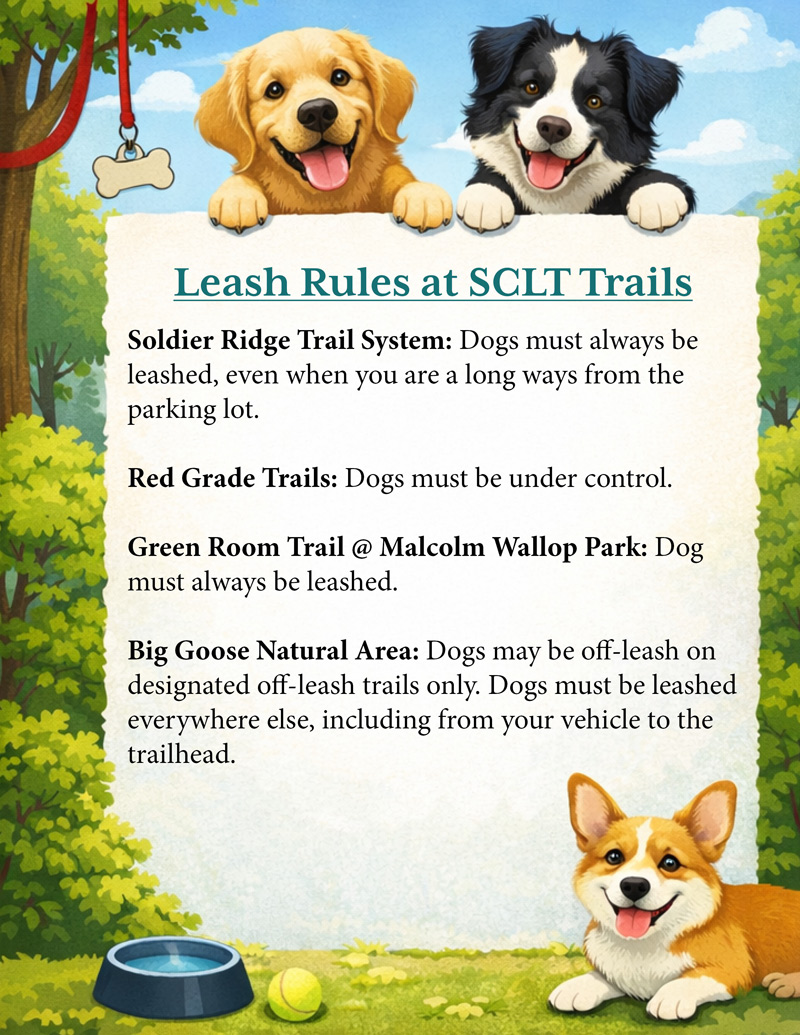
At the BGNA, some trails are designated as off-leash friendly. But that doesn’t mean anything goes.
“It’s important for people to understand that the Big Goose Natural Area is a trail system, not a dog park,” said Jared Koenig, SCLT Director of Recreation. “There are places where dogs can be off leash, but they still need to be under control, and people need to follow posted signage.”
The BGNA includes more than two miles of walking trails, with a mix of on- and off-leash areas. Visitors are encouraged to pay attention to signage and adjust accordingly.
“Off-leash is a privilege,” Koenig said. “It works when people are aware of their surroundings, their dog’s behavior, and other trail users.”
Know Where Leashes Are Required
Across other parts of the SCLT trail system, leash rules are more straightforward.
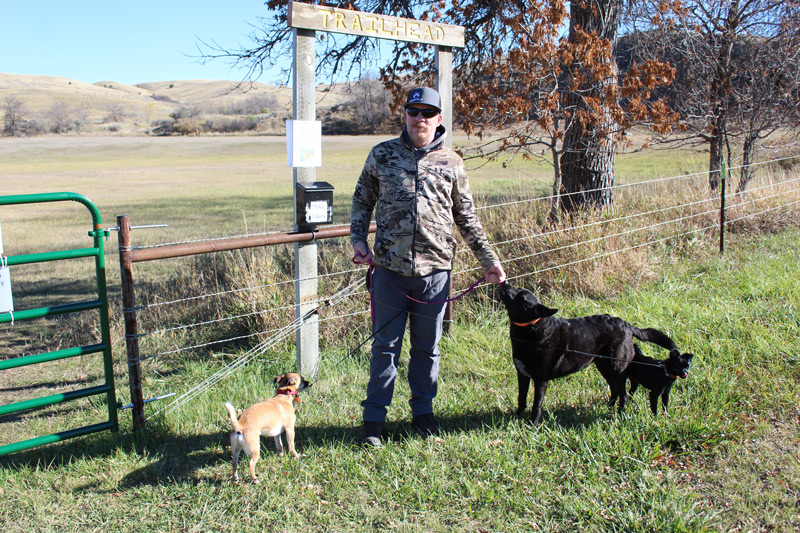
Dogs must be leashed at all times on all trails in the Soldier Ridge Trail System and on the Green Room Trail. These expectations help reduce conflicts with wildlife, livestock, and other users.
“Knowing where your dog needs to be leashed is one of the simplest things people can do to help keep trails open and enjoyable for everyone,” Koenig said.
Why a Leash Still Matters
As off-leash tools like e-collars become more common, it’s worth remembering that they are not a substitute for a physical leash in places where leashes are required.
Even well-trained dogs can react unpredictably around wildlife or livestock. A physical leash provides immediate, reliable control in situations where timing matters, especially near cattle, on narrow trails, or in areas with limited visibility.
Just as important are the people sharing the trail.
“Not everyone is comfortable around dogs,” Koenig relayed and explained, “Some people are scared of dogs, and some kids and adults don’t always know how to approach you and your dog safely.”
A leash creates a clear, visible signal that a dog is under control. It gives others space and confidence to pass without uncertainty.
In areas where leashes are required, using one is a simple way to reduce stress for your dog, for other trail visitors, and for you.
Access on Private Land
Many SCLT trails cross private land, and that access exists through partnerships with landowners.
At the Bridges property, which connects directly to the Big Goose Natural Area, trails are leash-only and are only possible through the participation and cooperation of the landowner.
“Access to places like the Bridges trails doesn’t happen by accident,” Koenig said. “It’s made possible because landowners are willing to work with us, and that trust depends on how people use the trails.”
What It Comes Down To
Whether on or off leash, the expectations are consistent:
- Keep dogs under control
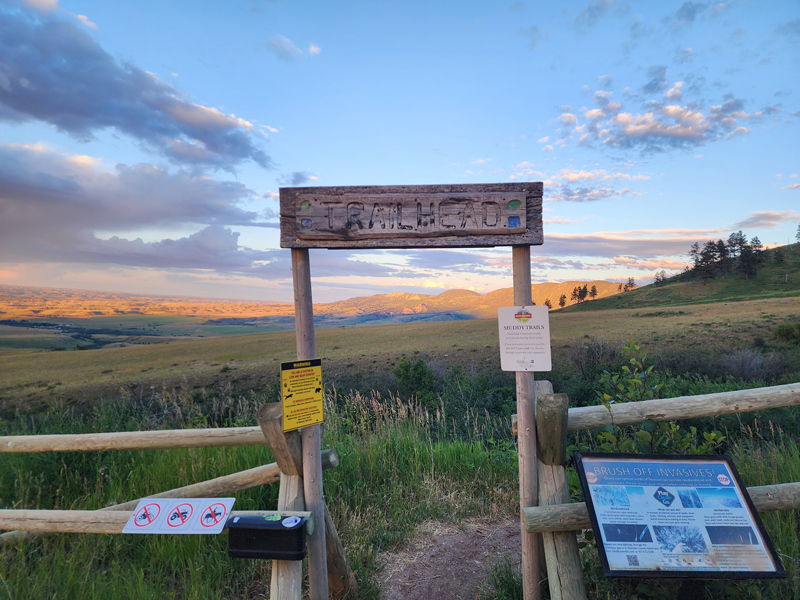
- Follow posted signage
- Know where leashes are required
- Respect other users, wildlife, and working lands
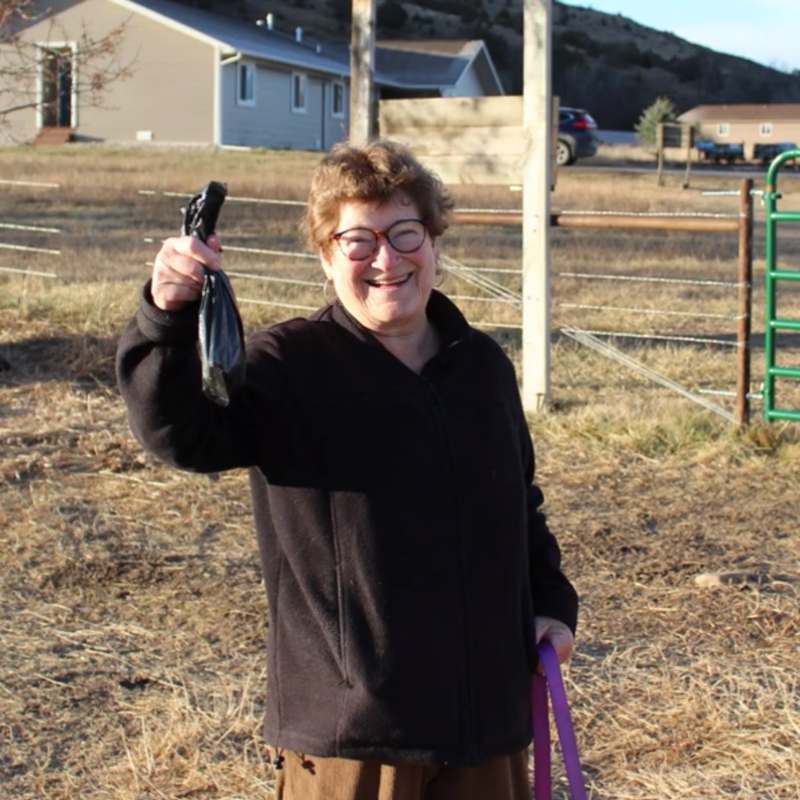
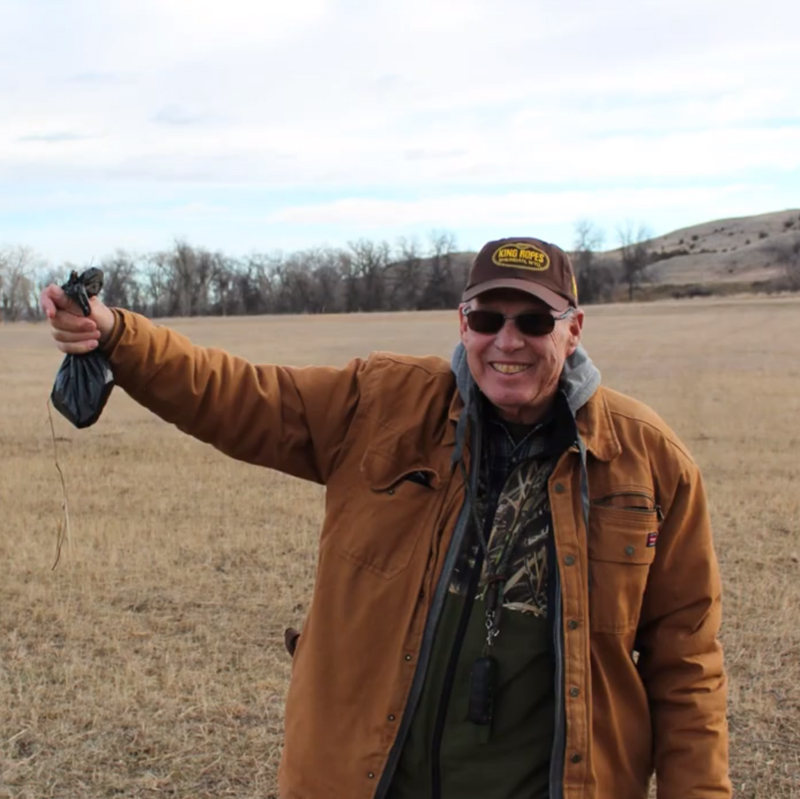
Small decisions, like picking up waste or leashing a dog in the right place, have a big impact.
“These are shared spaces,” Koenig said. “When people take responsibility for how they show up, it helps protect access for the whole community.”
Give Back to the Trails You Use
Great trails don’t happen by accident, and they don’t maintain themselves.
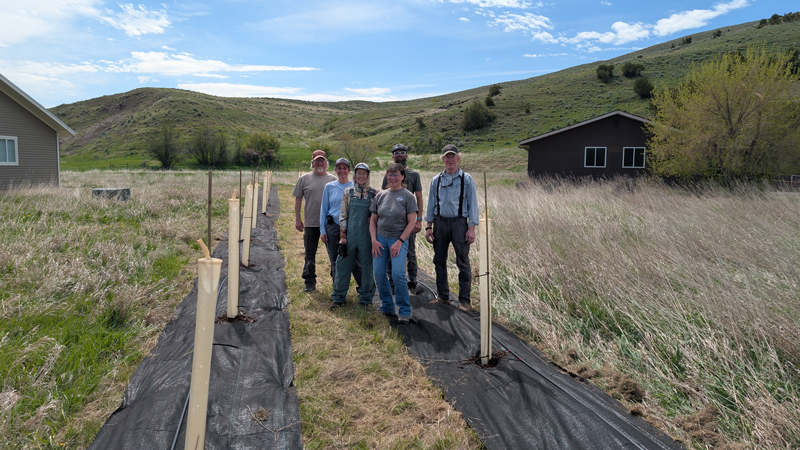
Building and caring for trails takes time, funding, and the steady effort of staff and volunteers. As trail users, we all have a role to play in keeping these places in good shape.
That can be as simple as making a donation to support trail building and maintenance, or giving a few hours to help with trail work.
It’s one more way to take responsibility for the places we enjoy and to help make sure they’re here for the next person down the trail.