Sheridan Community Land Trust has completed a major wet meadow restoration project on private ranch land along Sixmile Creek, just outside of Ranchester. This effort is designed to slow erosion, build soil health, and improve grasslands for grazing livestock and wildlife habitat.
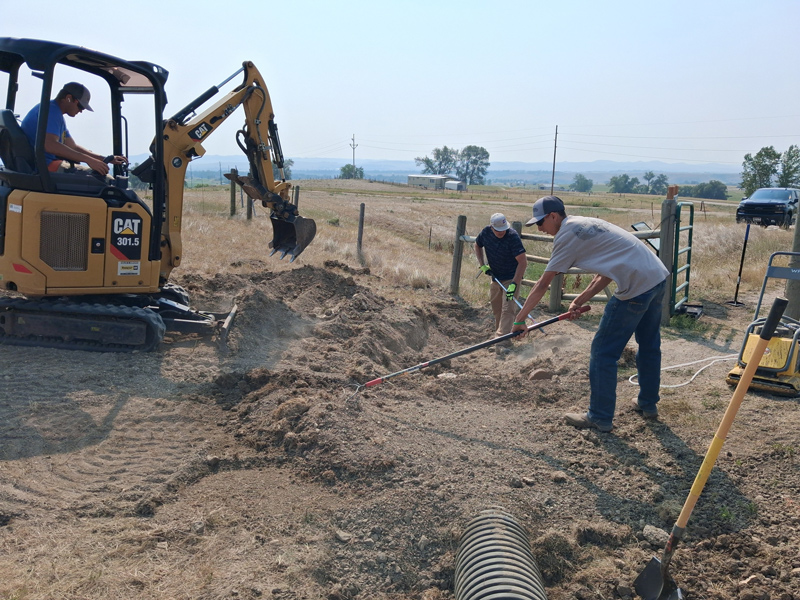
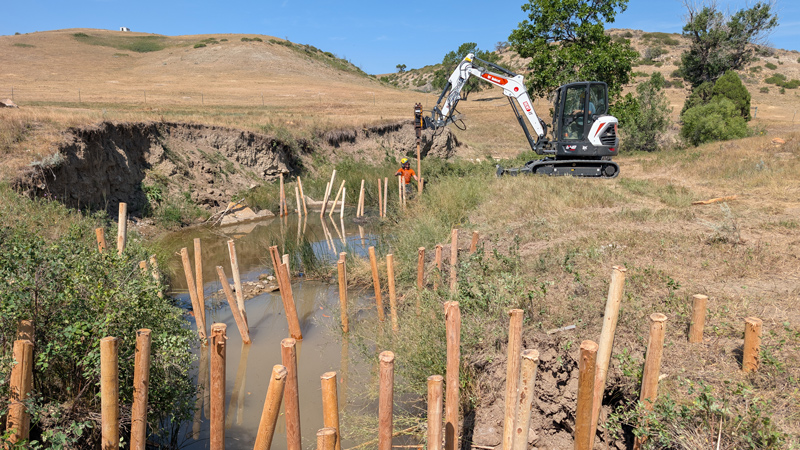
Over the past two summers, SCLT and its partners installed 98 Zeedyk structures to restore wet meadows (called mesic wetlands). Wet meadows support many different types of insects and the birds and wildlife that feed on them, improve forage for livestock, and help ranchlands stay resilient through wet and dry years.
“These kinds of projects hit the sweet spot between conservation and working lands. We’re improving habitat for wildlife, but we’re also improving the productivity of the land for ranchers. It’s a win on both fronts.” ~ John Graves, SCLT Director of Conservation
“These kinds of projects hit the sweet spot between conservation and working lands,” said John Graves, SCLT Director of Conservation. “We’re improving habitat for wildlife, but we’re also improving the productivity of the land for ranchers. It’s a win on both fronts.”
Zeedyk structures are low-tech, low-cost techniques that help slow down water, trap sediment, and stabilize soil. By catching and spreading out flowing water, they create conditions for grasses and native plants to reestablish. This helps rebuild eroded lands, prevent further soil loss, and expand the green, productive grazing areas ranchers rely on.
To strengthen the restoration and address damage caused by heavy spring moisture in 2025, SCLT brought in wetland restoration contractor Brian Stampe of Canopy Care to inspect, repair, and expand the network.
“When heavy moisture events hit, a strong network of Zeedyk structures can make the difference between land holding together or washing away,” Graves explained. “We’re setting this site up to be more resilient over the long term.”


The restoration effort was a true team project, with the Montana Conservation Corps, community volunteers, and SCLT staff contributing in 2024 and Canopy Care lending their expertise in 2025. The project was supported by Pheasants Forever and the National Wild Turkey Federation. Most importantly, it was made possible through the partnership and support of the landowners, who were involved from start to finish.
SCLT will monitor the project annually for the next four years, using established photo points to track changes in soil, vegetation, and water flow.
“This project is a great example of what can happen when landowners, partners, and the community all pitch in,” Graves added. “Sheridan County has a real can-do spirit, and that’s what makes meaningful conservation work like this possible.”
By working together with landowners, volunteers, conservation partners, and restoration experts, this project helps keep working lands healthy while supporting the wildlife and water that make Sheridan County special.