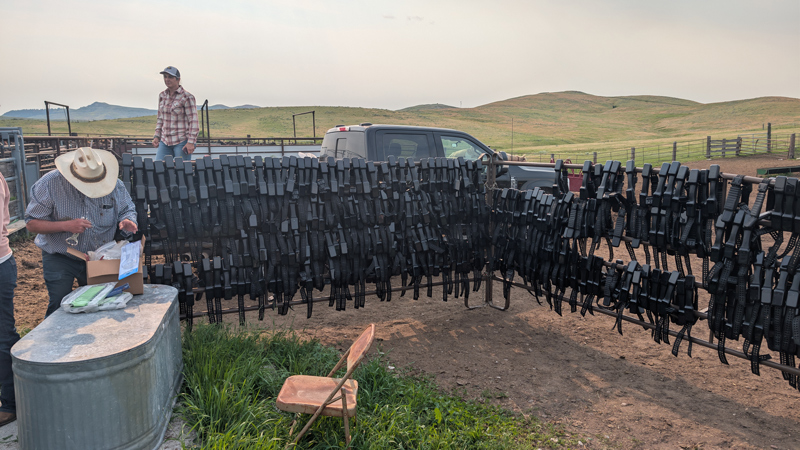
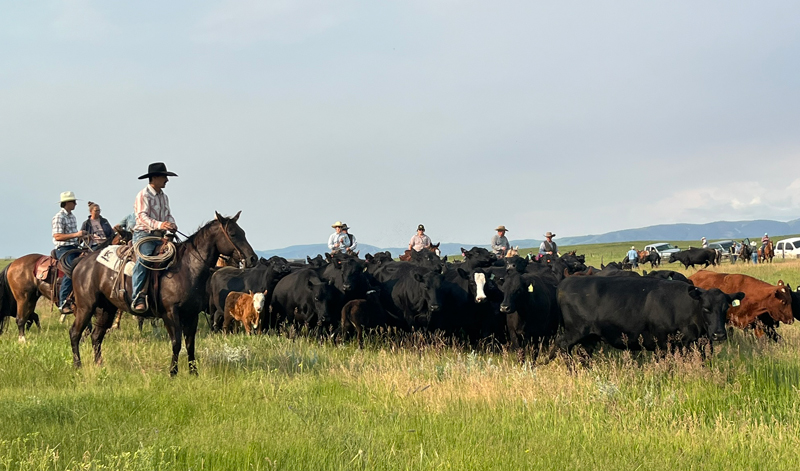
SCLT’s direct-to-satellite virtual fencing project reached an exciting milestone recently as staff joined Doug and Stephanie Masters to collar their cattle before summer turnout on grazing allotments in the Bighorn National Forest.
The deployment is the next step in testing how direct-to-satellite virtual fencing performs in one of the region’s most rugged and remote working landscapes.
Unlike earlier virtual fencing systems that relied on cellular or ground-based communication infrastructure, this technology communicates directly through satellites, opening new possibilities for grazing management on public lands where traditional infrastructure can be difficult or impractical.
“Getting the collars on the cattle is where planning becomes reality,” said SCLT Director of Conservation and Resource Management John Graves. “We’re excited to begin learning how this technology performs under real-world conditions in the Bighorns alongside a family that knows this landscape incredibly well.”
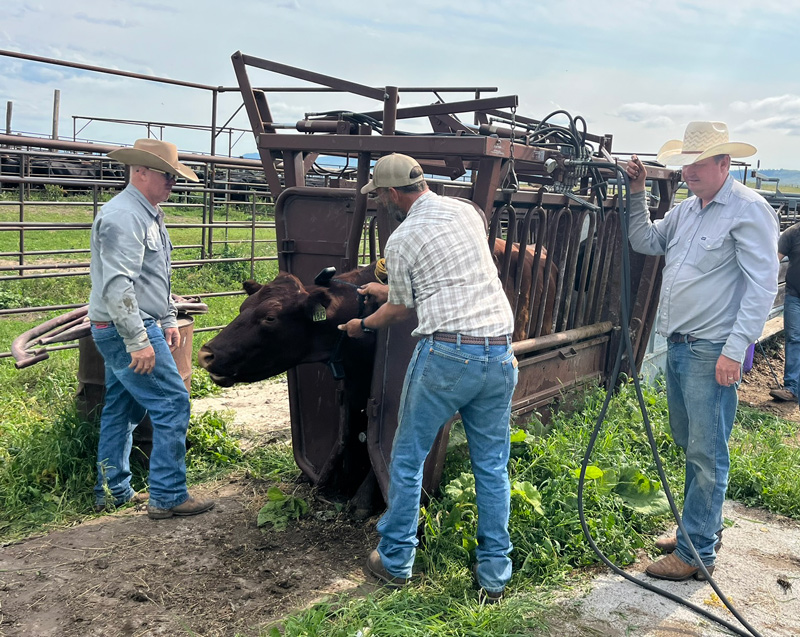
Throughout the grazing season, SCLT will work closely with the Masters family to evaluate how the technology supports day-to-day grazing management while helping improve livestock distribution and protect sensitive natural resources.
“What we learn this summer has the potential to benefit producers well beyond Sheridan County,” Graves said. “Our goal is to better understand where this technology works best and how it can become another practical tool for ranchers managing working lands across the Mountain West.”
This project is made possible through partnerships with Halter, Pheasants Forever, the Property and Environment Research Center (PERC), and Doug and Stephanie Masters. SCLT is grateful for their collaboration and commitment to advancing practical conservation solutions that support working lands, healthy wildlife habitat, and the future of ranching.
Want to learn more about virtual fencing? Click here to learn more.